Stop applying for sales jobs: 6 ways to break into tech sales in 2026.

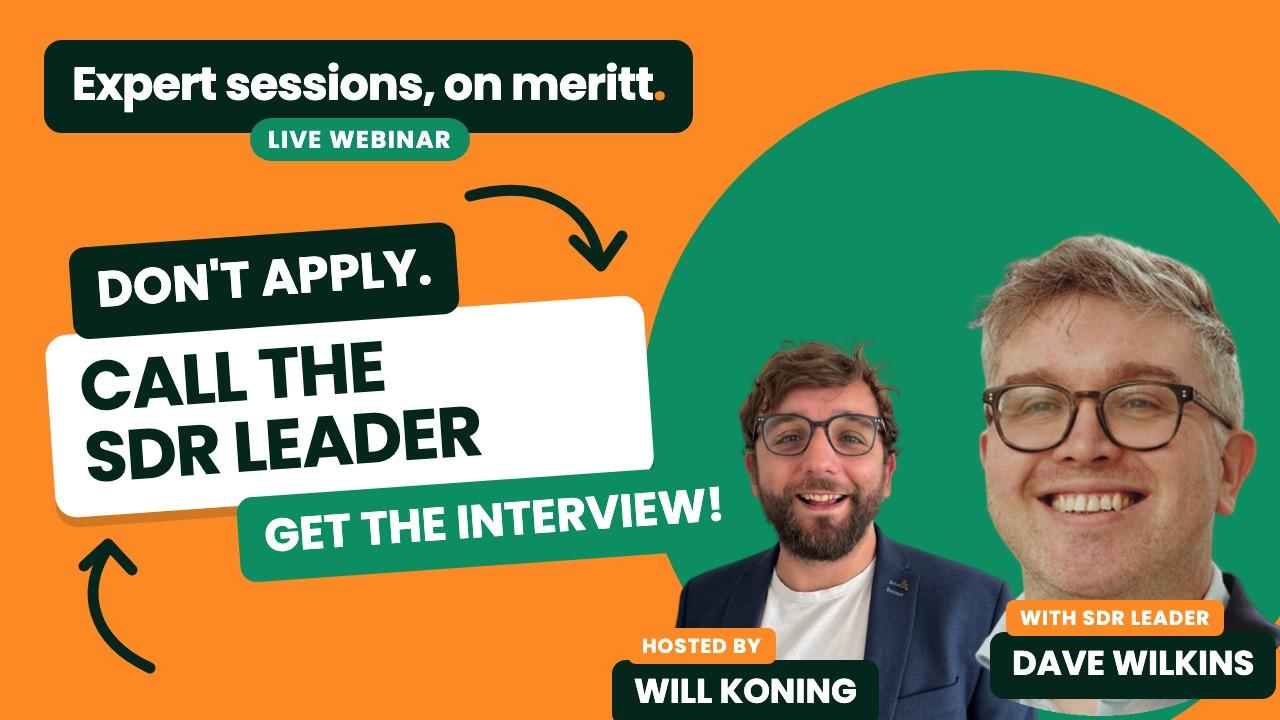
35 people sent him a LinkedIn message. None of them got an interview. Three people picked up the phone. All three did.
That's what happened when Dave Wilkins, the founder of SDR Leaders Global, promised an interview to anyone who cold called him about a role.
You've read the job ads. Entry level, two years' experience required. You've applied to dozens. You're starting to wonder if everyone else knows something you don't.
They do, a bit. Most people trying to break into tech sales apply, wait and apply again. Keep sending applications if you like. Just stop making them your whole plan.
Dave joined us on 6 November to explain what works instead. His community has more than 20,000 people who lead SDR teams, so he hears what they want every day. Here are six ways in from that session. You can watch the whole thing here.
1. Stop applying and call the hiring manager.
This was Dave's clearest piece of advice. When we asked how SDR leaders feel about candidates reaching out, he said: "Call them."
Remember the score: 35 messages, no interviews. Three calls, three interviews.
You can often find the number on the person's LinkedIn profile. If it's there, Dave sees it as "a surefire signal that you should call them." Keep the call short: who you are, why you're calling, and that you'd like an interview. A nervous call still counts. "It could be an absolutely terrible cold call, but you've got to try at least," he said.
2. Stop watching videos and say it out loud.
If Dave had 30 days to get ready for an SDR job, he wouldn't spend them reading.
You've got to do the skill... You have to do it because that's where you learn the best.Dave Wilkins, Founder, SDR Leaders Global
Watching videos feels like progress, but no hiring manager can see it. Say your opener out loud. Record it. Get someone to play a busy prospect and say no. On the meritt programme, you do this with an AI voice coach that pushes back and scores each try. A friend with a phone works too. What matters is that you start talking.
Want a place to begin? Read our guide to the pattern interrupt opener.
3. Your bar job is your best sales story.
You have more relevant experience than you think. "If you've worked in retail, worked in a coffee shop or a bar," Dave said, those are the stories that make people want to keep talking. They show you've worked in high-pressure places and dealt with people.
The trick is to join the dots. A list of random jobs sounds like you don't know what you want. Try this in three lines: what you did, how it's like sales, and why you want this now.
Dave's own story includes rugby, teaching and a mayonnaise factory. A recruiter saw coaching and moving countries as a reason to talk to him, and that started his career.
4. Do the one thing on LinkedIn almost nobody does.
Can't face the phone yet? Start here. "You could even document your journey," Dave said. SDR leaders spend a lot of time on LinkedIn, and few candidates do this.
Just getting your name out there as well is something that will stand out, because not many people do it.Dave Wilkins
Avoid writing a diary. "Make it interactive," he told one attendee. Use pictures and short videos on your phone. Share what you've learned. Try a countdown of 30 days of trying to break in, and say what you did each day. It gets you seen and it gives you something real to talk about in interviews.
5. The know-it-all is still an SDR. Be the other one.
Being coachable came second on Dave's list of what SDR leaders care about most, ahead of being a good talker. Two reps once joined his team at the same time. The humble one is now a regional sales manager. The one who thought he knew everything is still an SDR five years later.
So prove it before you're hired. Ask someone in sales to listen to your pitch and tell you what's wrong. Change it. Then tell the hiring manager what you changed and why. That one story says more than "I'm a fast learner" ever will.
6. The part nobody tells you: it takes two years.
Resilience topped Dave's list for a reason. You'll hear no a lot, and you need a way to keep going. Dave's first cold call left him in a cold sweat. "It was the most terrifying thing ever," he said. "But you just have to keep doing it."
It also helps to know the timeline.
You will be an SDR for two years. That's what the data says now.Dave Wilkins
That's two years of learning a skill that can open up the rest of your career. Know why you're doing it. Find people going through the same thing, so you've got someone to share the bad days with.
Your next step.
Don't try all six today. Pick one SDR leader. Find their number. Write three lines about why you'd be good. Then practise until you're ready to call.
For more ideas, read our 10 tips to break into tech sales, or see what SDR leaders look for in our full write-up of the session with Dave.
Common questions about breaking into tech sales.
Can you break into tech sales with no experience?
Yes. Entry-level SDR roles are one of the most common ways in, and many people start from other careers. Dave Wilkins has hired primary school teachers and someone who sold dirt bikes. He told us he cares more about attitude than about experience. You will still need to give an employer a reason to take a chance on you. Practise cold calling, connect your past jobs to sales and show you can take feedback. Calling the hiring manager directly is one of the fastest ways to show that you can do the job before you have held the title.
How do I get an SDR job with no sales experience?
Start by building proof. Practise cold calls out loud and record them. Write a three-line story that links what you have done to sales. Post about what you are learning on LinkedIn, because SDR leaders spend time there. Then go direct. Find SDR leaders who are hiring, look for a phone number on their profile and call them. If there is no number, send a short message that shows what you have done to prepare. Applying through job boards is fine, but do it alongside direct outreach so that you are not one more CV in a long list.
How do you find an SDR leader's phone number?
Start with their LinkedIn profile. Dave Wilkins told us that a lot of SDR leaders list their number there, and he sees that as a clear sign that you should call. Open the Contact info section as well as the About section. If you cannot find a number, send a short LinkedIn message or a voice note from the mobile app, which stands out in a busy inbox. Prospecting tools can also help you find business numbers. Whichever route you use, keep the first call brief, say why you are calling and ask for one specific next step.
How long do people stay in an SDR role?
Plan for about two years. Dave Wilkins told our session that this is what the data now shows for how long people stay in the role. That can feel like a long time when you are starting out, but it is when you learn the skills the rest of a sales career is built on: handling rejection, finding the right people and starting conversations. Dave also warned that the next step can bring lower pay at first, because you will still be learning a new craft. Go in knowing that, and pick a team that will coach you.
Hire great salespeople, better.
Sales people who recruit sales people. A flat fee, a shortlist with evidence, and a process candidates rate 4.8.
See how we hire