Stop clicking Easy Apply: land your first SDR job.

You clicked Easy Apply again last night. Maybe 20 times. By the morning there were three rejection emails, and the rest said nothing at all.
You're not the only one. On our live session on 27 November 2026, about half the room were students or graduates, and about 40% were changing careers. When we asked what happens after they apply for SDR jobs, a lot of them said the same thing: rejection emails.
So we asked someone who has sat on the other side of that inbox. Matthew Mothersole ran 70+ SDRs across 7 countries at American Express GBT. He hired 42 SDRs in 15 months at Traction on Demand (now Salesforce) and led enterprise sales at Salesforce. Today he is the founder of Maple Consultancy.
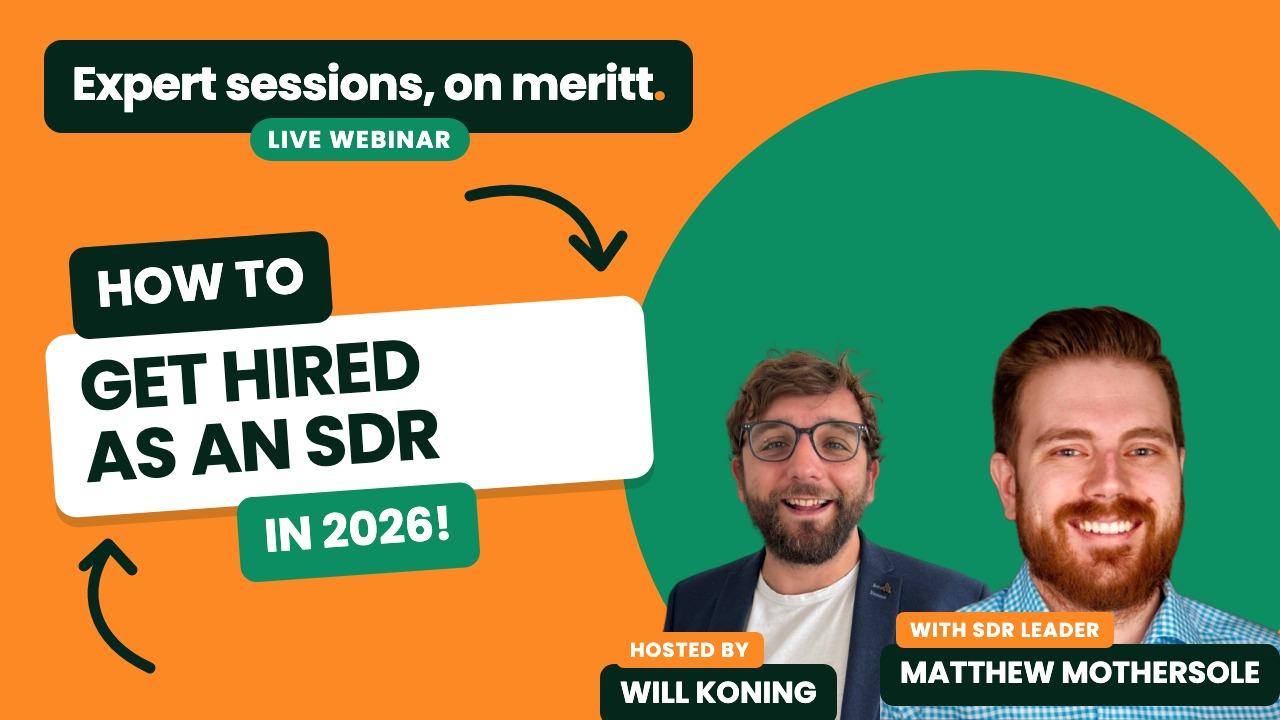
He joined Will Koning, the founder of meritt, for our second expert session. The idea is simple: hear from expert hiring managers on what it takes to get the SDR role. Here is the full recording, and the parts that matter most.
The best SDRs he hired came from everywhere.
Will asked where Matthew's best SDRs came from. His first word was "Everywhere."
"I've led everyone you can imagine," he said. "So college dropouts, servers, someone who worked in a shoe retail, like a high-end store that was selling shoes, retired school teacher." One was an ex-NHL player who retired from hockey and "needed to find a career, became an SDR."
Where are they now? "They're leaders in other organisations, they're account executives, generally within enterprise space," Matthew said.
So a CV full of bar shifts and shop work does not rule you out. What counts is how you explain it.
Turn your last job into numbers.
You can't write "200 dials a day" on your CV if you've never made a dial. Matthew knows that. What you can write is what you achieved in the job you did have.
His favourite example was the shoe seller. In her interview, she talked about upselling in a high-end shop. "We're talking about $2,000 pair of shoes, and how did she sell three pairs to that same person during that same fitting," he said. "She was showing me metrics."
Will made the same point to the room. Think about what you did, then think about what you achieved. A server who talks about upsells shows commercial drive. A list of duties does not.
Try it tonight. Write down three numbers from your last job: sales, upsells, repeat customers, targets or reviews. Put the best one on your CV and practise saying it out loud.
Matthew also does something in interviews worth preparing for. He spends the first five to ten minutes telling his own career story, then asks the candidate to do the same. "Be that storyteller," he said. Have yours ready before he asks.
Get in front of the hiring manager.
Will asked what makes a candidate stand out from the pile. Matthew's answer was to reach the person who hires. "This is reaching out to them on LinkedIn. If you could get their number, call them and try and talk to them ahead of time."
He doesn't expect the most impressive CV on the planet from someone entry level. He looks for hunger, and for someone who will be coachable. That often shows in how you approach him.
Are you just applying to 200 jobs online and clicking Easy Apply on LinkedIn? Or are you getting in front of hiring managers?Matthew Mothersole, Founder, Maple Consultancy
Will added the numbers he sees. He said an SDR role on meritt gets 300 to 400 applicants, and on a good day only about 30% of them record the video introduction the job asks for. So recording one already puts you ahead of most of the pile. Our guide shows how to stand out with a video introduction.
Tell the truth on a cold call.
The day before the session, Matthew had posted on LinkedIn that he was looking for freelance SDRs. Two replies stood out, for opposite reasons.
The first was a voice note. "On the voice note, I could hear them vaping," he said. "They're automatically, we're done."
The second was a cold call. He picked up, and the caller said: "Hey Matthew, really quick, this is a cold call. Just so you know, I'm calling to apply related to the post that you put. However, I'm actually a fairly new SDR. Would you have 30 seconds to hear what I have to say?"
"Even that opener was enough for me to pay attention to them because they were honest," Matthew said. The caller fumbled a bit after that, out of nerves. It didn't matter. "The intro did everything for me."
Later, someone asked what he expects people who have never worked in software sales to have practised. "I think I expect them to practise being vulnerable," he said. To him, being vulnerable and being brave go together. On his teams, new SDRs made their first cold call in their first week.
Want to build an opener like that one? Read how to open a cold call honestly.
Attitude is the part only you control.
We asked the room what gets an SDR hired. Most people voted for attitude and behaviour. A few picked sales skills, and a couple picked sales experience. Matthew's answer came straight away: attitude and behaviour. "Hard skills can be taught," he said.
But the attitudes and the behaviours, that's completely on you. That's completely your choice. And nobody can do that for you.Matthew Mothersole
At meritt, the traits we look for are coachability, curiosity, communication and grit. Will's warning was that anyone can say they're curious. You need an example that proves it.
Of those four, Matthew singled out communication. It "doesn't matter if you're an extrovert or an introvert," he said. What matters is being comfortable as yourself in front of other people. That helps you in the job search. It helps later too, "when you've got to make hundreds of dials and get rejected a bunch of times."
What an SDR does all day.
One person asked how to stay yourself in sales without feeling like you're acting. Matthew's answer may surprise you.
Being an SDR has nothing to do with sales. So it's about good discovery. It's about having good conversation.Matthew Mothersole
A good SDR call lets the other person know you understand their pain, and that you might have something that helps. "And if they are interested, you're going to get a meeting," he said.
He used a carpenter to explain. You don't need to tell a carpenter they need a hammer. They already know. "What is the pain that they feel? And your job is to point to that." So spend your prep time learning the problems your buyers face.
Get good on the phone.
Another person asked for the one advantage to build this week that most applicants ignore. Matthew didn't need long: "I'd say get good at being on the phone."
More emails are going out than ever, he said. LinkedIn, video and voice notes all work. "But the best conversion rate is going to be on the phone." He has seen salespeople in big companies who were terrified to call, while "some of their peers who were picking up the phone were three times, four times in their bonuses."
Getting good on the phone takes practice out loud. That is what the meritt programme is built around. You practise real calls with an AI voice coach that pushes back, then we help you get seen by the people who hire.
Ask this one question in your interview.
The last question of the day was how to tell, in an interview, whether a team will grow you or set you up to fail. Matthew's suggestion:
"Could you walk me through now in three minutes or less, what is the process in terms of timeline for growth of an SDR into a sales role within your organisation?"
"This will tell you, one, do they even have it? Does it exist?" he said. Then you learn how formal it is. If a company grows its people and has a system for it, he said, it is very likely hitting its targets too.
Expect the climb to take a while. Matthew remembers when SDR to account executive took about 12 months. Now he hears 18 or 24 months.
Matthew also picked the best question of the day. It was the one about which teams grow their SDRs and which ones let them stall. When he first heard it, he said: "If I heard this on an interview, I'd be like, whoa, who is this person?" Bring that kind of question to your own interviews.
What to do this week.
Don't try everything at once. This week, rewrite one line of your CV so it has a number in it. Write an honest opener and say it out loud ten times. Then find three hiring managers for SDR roles and reach out on LinkedIn, or call if their number is on their profile.
Keep the growth question for your next interview. And if you missed our first expert session, read what SDR leaders look for, our write-up of the session with Dave Wilkins.
Common questions about getting hired as an SDR.
How do I get an SDR job with no experience?
Start with proof you can build now. Turn your last job into numbers: sales, upsells, repeat customers or targets you hit. On our expert session, Matthew Mothersole said his best SDRs included college dropouts, servers, a shoe seller, a retired teacher and an ex-NHL player. He also said entry-level hiring managers don't expect the most impressive CV. They look for hunger and for someone who will be coachable. Then go direct. Reach out to hiring managers on LinkedIn, and call them if their number is on their profile. Practise your cold call out loud before you make it, and say up front that you're new.
What do hiring managers look for in an SDR?
Attitude and behaviour come first. When we asked our session what gets an SDR hired, Matthew Mothersole chose attitude and behaviour straight away. He said hard skills can be taught, but your attitude is your own choice and nobody can do it for you. At meritt we look for four traits: coachability, curiosity, communication and grit. Saying you have them is not enough, so bring an example for each, like feedback you acted on or a question you dug into. Matthew singled out communication, and said it doesn't matter if you're an introvert or an extrovert.
Is Easy Apply worth it for SDR jobs?
On its own, it rarely gets you noticed. On our session, Will Koning said an SDR role on meritt gets 300 to 400 applicants, so a CV in the pile is easy to miss. Matthew Mothersole's advice was to get in front of the hiring manager too. Reach out to them on LinkedIn and, if you can find their number, call them ahead of time. Record a video introduction when a job asks for one, because on a good day only about 30% of applicants do. Keep every touchpoint professional. Matthew ruled out one applicant straight away because he could hear them vaping on their voice note.
What should I ask in an SDR interview?
Ask about growth. Matthew Mothersole suggested this question: "Could you walk me through now in three minutes or less, what is the process in terms of timeline for growth of an SDR into a sales role within your organisation?" The answer tells you whether a path exists and how formal it is. Teams that grow their people tend to hit their targets too. You can also ask what success looks like in your first month, your third month and your first year. Expect the move from SDR to account executive to take longer than it used to. Matthew now hears 18 or 24 months.
Hire great salespeople, better.
Sales people who recruit sales people. A flat fee, a shortlist with evidence, and a process candidates rate 4.8.
See how we hire